EN
EN SP
SP FR
FR
- Home
- About Us
- Products
- Service
- Project
- News
- Contact Us
Pulished on May. 23, 2023
358 security fences are widely used in various applications. Among them, V-fold and non-V-fold designs are two common variations. This article aims to provide a detailed comparison of the two fences, highlighting their differences and contrasts.

First Structural Design:
The V-fold 358 security fence features V-shaped folds added between the vertical wires, enhancing the fence's strength and stability. These folds provide additional structural support, making the fence more robust. In contrast, the non-V-fold 358 security fence lacks this folding structure, resulting in a relatively simpler design.

Second Anti-Climbing Capability:
The V-fold 358 security fence offers enhanced anti-climbing capabilities due to its folding structure. The V-shaped folds make it challenging for intruders to find suitable footholds, effectively deterring climbing attempts. On the other hand, the non-V-fold 358 security fence has relatively weaker anti-climbing features, as climbers may find it easier to scale the fence.
Third Aesthetic Appearance:
The V-fold 358 security fence has a unique and visually appealing appearance due to its folded structure. The pleats add a decorative element to the fence and make it more visually interesting. In contrast, the non-V-folded 358 security fence has a simpler and simpler appearance, focusing on functionality.
Fourth application scenario:
The V-fold 358 security fence is often used in high-security areas such as prisons and military facilities that require enhanced anti-climbing capabilities. Its superior protection features effectively prevent unauthorized access and escape. The non-V-shaped 358 security fence is suitable for the general security needs of industrial parks, public buildings and other similar environments, providing basic security protection.
Conclusion:
The V-fold and non-V-fold 358 security fences differ in terms of structural design, anti-climbing capabilities, aesthetic appearance, and application scenarios. The V-fold design provides advantages in terms of strength, anti-climbing capabilities, and visual appeal. However, the choice between the two types of fences depends on specific security requirements and the intended application.
How to Choose Farm Fence for Cattle and Horses: Wire, Height and Design Guide
Pulished on Sep. 23, 2026
How Is Chain Link Fence Made? Manufacturing Process and Components
Pulished on Sep. 18, 2026
358 Security Fence vs Chain Link Fence: Security, Cost and Application Comparison
Pulished on Sep. 15, 2026
Why Choose Welded Wire Fence for Security and Protection?
Pulished on Sep. 07, 2026
358 Security Fence Specifications and Applications Guide
Pulished on Aug. 27, 2026
What Is Farm Fence and What Are the Main Types?
Pulished on Aug. 26, 2026
Welded Wire Fence Types, Sizes and Applications Guide
Pulished on Aug. 20, 2026
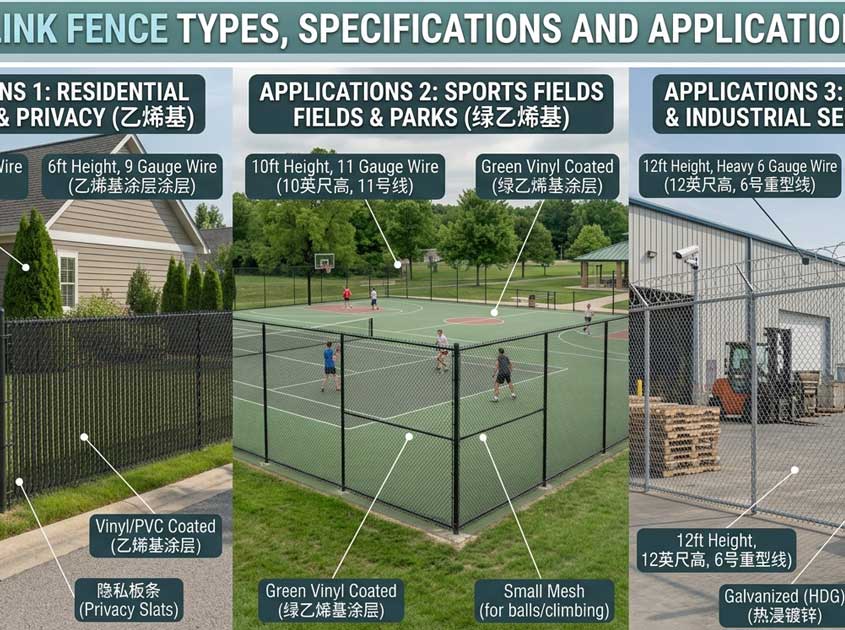
Chain Link Fence Types, Specifications and Applications Guide
Pulished on Aug. 12, 2026
How to Choose Farm Fence for Cattle and Horses: Wire, Height and Design Guide
Pulished on Sep. 23, 2026
How Is Chain Link Fence Made? Manufacturing Process and Components
Pulished on Sep. 18, 2026
358 Security Fence vs Chain Link Fence: Security, Cost and Application Comparison
Pulished on Sep. 15, 2026
Why Choose Welded Wire Fence for Security and Protection?
Pulished on Sep. 07, 2026
358 Security Fence Specifications and Applications Guide
Pulished on Aug. 27, 2026
What Is Farm Fence and What Are the Main Types?
Pulished on Aug. 26, 2026
Welded Wire Fence Types, Sizes and Applications Guide
Pulished on Aug. 20, 2026
Chain Link Fence Types, Specifications and Applications Guide
Pulished on Aug. 12, 2026